
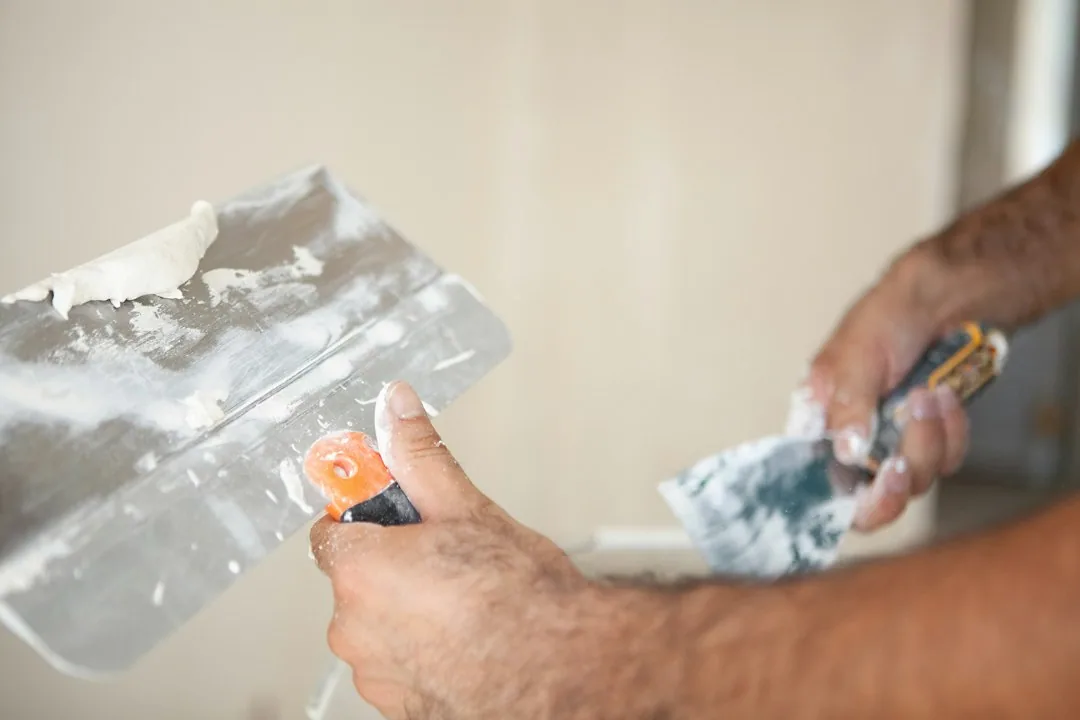
Smooth walls with skim coating
A smooth wall requires a suitable substrate and a finish that fits paint or wallpaper.
On this page
Smoothing walls: when does skim coating fit?
A thin finish needs a suitable base
Skim coating is used to finish an existing wall finely and evenly. The starting point is a substrate that the new layer can wear. Deep holes, large deviations and loose parts first require a different treatment. Therefore, let us distinguish between repairing or flattening the wall and applying the thin end finish.
Paint, spack and decorative plaster request an assessment
Please indicate which finish is on the wall and what you know about previous treatments. The existing layer must be examined before a new layer passes over it. A strong-looking outside does not say everything about the adhesion below it. Always show a different place or earlier moisture load and decide which parts are first removed or restored.
Tune smoothness to paint and lighting
A light matt paint gives a different visual image than a dark or shiny paint. Also side light along a wall makes small differences more visible. Discuss the chosen finish and the location of windows and wall lights in advance. Ask for an appropriate test surface in case of high visual requirements and determine what preparation is still needed before painting.
This is what you discuss in advance
- Write down the existing wall finish.
- Let great unevenness and loose layers first assess.
- Pass on paint type, colour and lighting in advance.
The preparation and work at close range.
More answers on this topic
Does a thin stucco layer straighten up a crooked wall?
Not automatic. Fine smoothing and correcting large deviations are various tasks. Let us determine how much flattening is needed before the final layer is chosen.
Can I paint directly after skim coating?
The layer must be suitable and sufficiently dry for the chosen paint construction. Also agree who removes dust, sands locally and pre-treatment.
From structure wall to a quiet whole
Smoothing a wall can make a room more optically quiet, especially in large areas and long lines of vision. The correct procedure starts with what is already on the wall. A thin coating is intended to work a suitable base finely; it does not replace repairing loose layers or flattening large deviations.
Do you want to smooth existing spachtelputz, spack or a painted wall? Pass on the structure and previous repairs. Also discuss whether boards remain in place, how electrical sockets are finished and where the new plaster work should end. Precisely such connections determine whether the desired look looks well.
This is what you want to meet before the performance
| Component | What should you discuss? |
|---|---|
| An existing structure | Review adhesion, relief and required surface build-up of the plaster layers before evening. |
| A crooked wall | Allow to capture whether only smoothness or also flatness and position are corrected. |
| Dark or shiny paint | Discuss the higher visibility of small irregularities and the desired test surface. |
| A kitchen or fixed wardrobe | Please report the dimensions and necessary connections prior to execution. |
This is how you make your question concrete
Suppose you want a long living-room wall smoothed and painted dark blue. Assess it in the light from the windows and under the lighting you will use. Agree on the finish across the whole visible wall, the corners and any preparation for painting. One smooth test area will not show how the entire finished wall will look.
Use this example as a call help, and the appropriate working method is determined by the actual state of your space.
The finish in the picture.
Atmosphere images to view differences in surface, space and light.
Questions about this finish
Smoothing is the same as plastering again?
Not always. Smoothing can be a thin finish on a good existing layer. Rebuilding may be necessary if not enough adhesion, damage or larger defects. The condition of the wall determines the work.
Can the wall get any color after that?
The colour selection is part of the painting plan. A dark colour or higher shine makes background differences visible faster. Therefore, discuss the finishing level, possible post-working and the paint construction together.
Continue your preparation
Discuss your plastering project.
Send your wishes, images and estimated dimensions. We will check which preparation and finishing suits your home.