
All-round plastering services
A complete job for plastering can include preparation, wall and ceiling work and a follow-up work.
On this page
One plan for different types of plastering
From a loose wall to a complete floor
In the process of remodeling, several tasks often come together: repairing slots, flattening walls, finishing ceilings and providing connections around new windows. An all-round plasterer looks at how these parts connect together. Therefore, make an overview per space. Not only the meters, but also the installations, kitchen components and floor finishes that are still being placed.
The correct order prevents duplicate work
Discuss the work that still opens or damages the walls. Then follow the assessment of the substrate, protection and the agreed plaster work. Painting or hanging only comes when the substrate is suitable for this purpose. Identify who controls the transition between these activities. This way you prevent a net finished wall from being broken again immediately.
Arrange the result per room
A bedroom with wallpaper, a living room with matte paint and a ceiling with spotlights make different demands on the finish. One description as . . . . . . . . . . . . . . . . . . . . . . . . . . . .
This is what you discuss in advance
- Create a room layout with wall and ceiling meters.
- Specify the order of installer, craftsman for plaster and painter.
- Allow repair work and final finishing to be described separately.
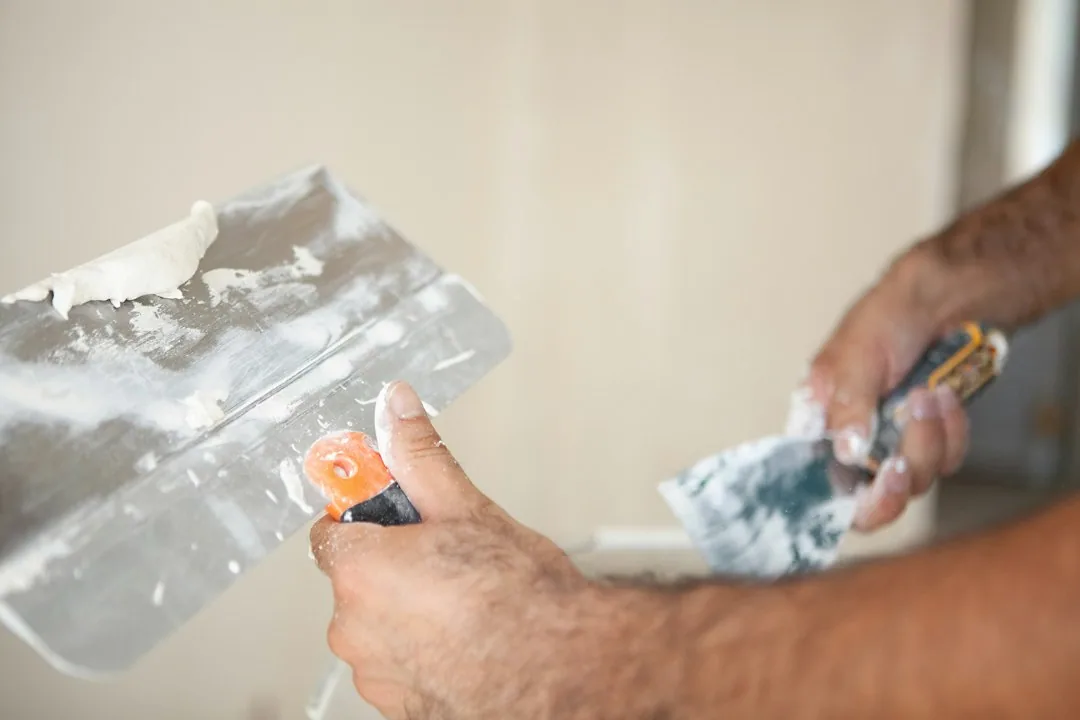
The preparation and work at close range.
More answers on this topic
Can I combine different finishes in one job?
Yes, discuss the desired use and appearance per room. Show in the quotation where smooth plastering, a structure finish or only repair is performed.
Should the whole place be empty at the same time?
This depends on the agreed phaser and work access. Please discuss in advance which spaces are available and how walking routes, protection and drying space are arranged.
Multiple spaces, one clear work plan
An all-round assignment can consist of new walls, a ceiling, local restoration and various final finishes. Describe those components separately. This makes visible what preparation per space is needed and where other performers influence the planning.
For this purpose, a wall stand is practical: record the area per room, existing substrate, damage, desired finish and details. Thus, the work can be planned coherently without losing sight of the differences between, for example, bathroom, living room and staircase.
This is what you want to meet before the performance
| Component | What should you discuss? |
|---|---|
| Per room | Create your own rule for surface and finish. |
| Per substrate | Write down concrete, plates, old plaster or structure. |
| Per connection | Pass windows, skirts, kitchen and lighting. |
| Per phase | Arrange preparation, execution and transfer. |
This is how you make your question concrete
For example, in the case of a renovation, you can finish the installation work first, then close the slots and repair damage and then finish the agreed viewing surfaces. Make clear before the start whether a later placed partition or cabinet will result in additional repair.
Use this example as a call help, and the appropriate working method is determined by the actual state of your space.
The finish in the picture.
Atmosphere images to view differences in surface, space and light.
Questions about this finish
Can one offer contain different finishes?
Yes. It is precisely in multiple rooms that it is wise to describe the work and the finishing level per part.
How do I prevent anything from falling between two performers?
Capture who prepares, who controls and who performs the next finish. Above all, describe the transfer moments, such as before plastering and before painting.
Continue your preparation
Discuss your plastering project.
Send your wishes, images and estimated dimensions. We will check which preparation and finishing suits your home.