
Plaster repairs
repair starts with cause and adhesion. A loose layer, leakage site and active tear require different assessments.
On this page
Recovering plasters starts from the cause
Make damage recognizable first
Photograph a rift or loose spot from close up and from the entire space. Note when you saw and or change the damage. Specify a leakage, recent installation work or other event that preceded it. A crack, moisture and peeling paint may resemble each other at first glance, but do not automatically ask for the same solution.
Decide what can remain in place
The performer evaluates which part is sufficiently solid and suitable to continue working on. Loose or unsuitable layers are not only covered with a new layer of vision. If movement or persistent moisture is first required, a different cause treatment is needed. Let us record which parts are removed, how the substrate is prepared and which plane is refinished.
Discuss how visible the repair may be
New and old may differ in structure, suction, shine and colour. A small repair is not always the best choice for a large visible surface. Discuss whether only the damage site, the entire wall or also the painting is included. After completion save images and material data for any check or subsequent repair request.
This is what you discuss in advance
- Make a note of the origin, course and possible moisture load.
- Have the adhesion and cause assessed.
- Agree the extent of repair and painting.
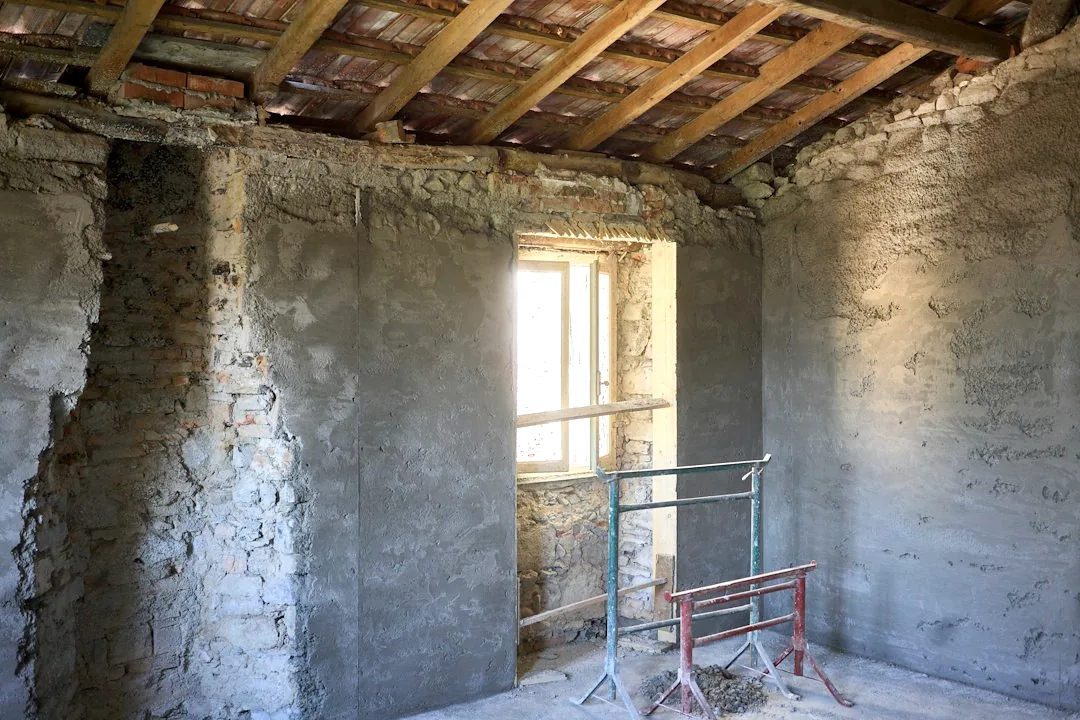
The preparation and work at close range.
More answers on this topic
Can a tear simply be lubricated?
First it must be clear what causes the tear and whether the situation is stable. A local filling does not automatically solve continuous movement or moisture problems.
Does a repair always become invisible?
This can not be guaranteed in advance. Structure, colour, light and the size of the applied surface play along. Let us discuss the intended visual image and the further finish.
Start with the cause, then at the surface
Cracks, loose pieces, impact damage and leaks have several causes. Therefore, the repair method follows from the damage and condition of the substrate. Only filling the visible hole can be insufficient when the layer around it is no longer firmly attached.
Take overview photos and detailed pictures. Please indicate when the damage occurred, or when it changes and whether moisture has been present. An image helps with the initial assessment, but cannot always replace research into adhesion, moisture or movement.
This is what you want to meet before the performance
| Component | What should you discuss? |
|---|---|
| A recurring crack | Let movement and the architectural situation be assessed. |
| Loose plaster | Determine the size of the insufficiently adhesive layer. |
| A damp patch | Solve the cause and assess the suitability for repair. |
| Visible color differences | Discuss restoration of the whole visible surface and the painting. |
This is how you make your question concrete
A leaking site above a window can show another discoloration after drying. In this case, cause, strength of the patch and the subsequent paint build-up must be considered separately. Ask for a repair proposal that also explains how the transition to the existing finish is treated.
Use this example as a call help, and the appropriate working method is determined by the actual state of your space.
The finish in the picture.
Atmosphere images to view differences in surface, space and light.
Questions about this finish
Will a repaired tear never come back?
This cannot be generally promised. If the cause or movement continues, a crack can come back. The assessment and chosen detailing are therefore decisive.
Why is a larger surface sometimes repaired than the damage?
The layer around the damage can also not attach enough. In addition, a larger visible surface may be needed to make colour, flatness or structure better connected.
Continue your preparation
Discuss your plastering project.
Send your wishes, images and estimated dimensions. We will check which preparation and finishing suits your home.